2018年5月25日 星期五

Trump says 'productive' talks held on reinstating N Korea summit


http://www.bbc.com/news/world-asia-44263045

Trump says 'productive' talks held on reinstating N Korea summit
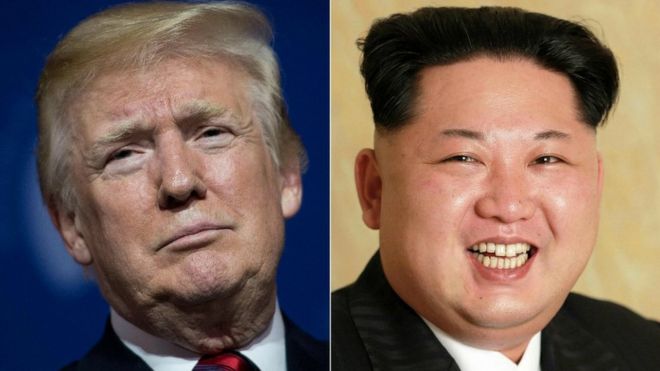
Composite image of Donald Trump and Kim Jong-unImage copyrightAFP
Image captionWhether or not the talks will take place appears to be anyone's guess
US President Donald Trump says "very productive talks" have been held with North Korea on reinstating the summit with leader Kim Jong-un.
In a tweet, Mr Trump said the meeting could still take place on 12 June in Singapore "and if necessary will be extended beyond that date".
He cancelled the summit on Thursday, blaming the North's "open hostility".
But North Korea later appeared conciliatory, saying it was willing to talk "at any time in any form".
Shortly before Mr Trump's tweet, the South Korean presidency said it was thankful that the "summit embers are not put out and it is coming back to life".
Whether or not the talks will take place in just over two weeks' time is, frankly, anyone's guess, the BBC's David Willis reports from Washington.
Summit meetings of this kind usually involve months of detailed planning and some analysts have expressed disquiet that private discussion of policy differences appears to have been replaced by "diplomacy by tweet", our correspondent adds.
President Moon Jae-in had earlier said he was "very perplexed" and that it was "very regrettable" that the summit was not going ahead.
The summit planned for Singapore would have been the first time a sitting US president had met a North Korean leader.
Although the precise agenda was unclear, it was expected that the two leaders would discuss ways of reducing tensions and denuclearising the Korean peninsula.
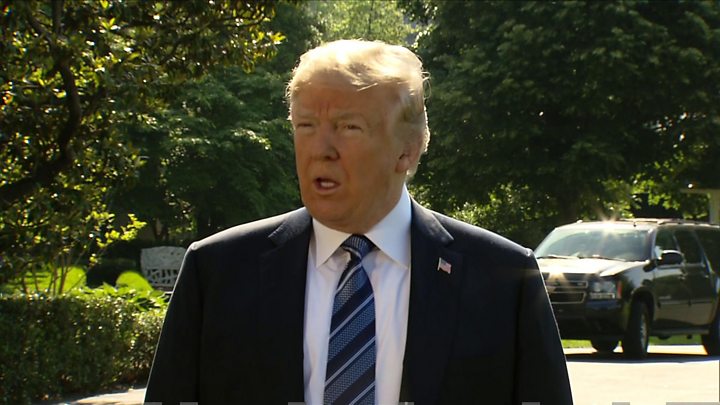
Media captionTrump: 'North Korea meeting could still happen'
It was South Korean officials who first informed the US earlier this year that Mr Kim was prepared to discuss potential nuclear disarmament.
In April, the leaders of both Koreas had a historic meeting at the border, promising to end hostilities and work towards the denuclearisation of the peninsula.
US Secretary of State Mike Pompeo visited North Korea for preliminary talks with Mr Kim and plans for the historic summit were announced.
However, the North quickly became angered by comments from senior US officials who made comparisons with Libya. There, former leader Colonel Gaddafi gave up his nascent nuclear programme only for him to be killed by Western-backed rebels a few years later.
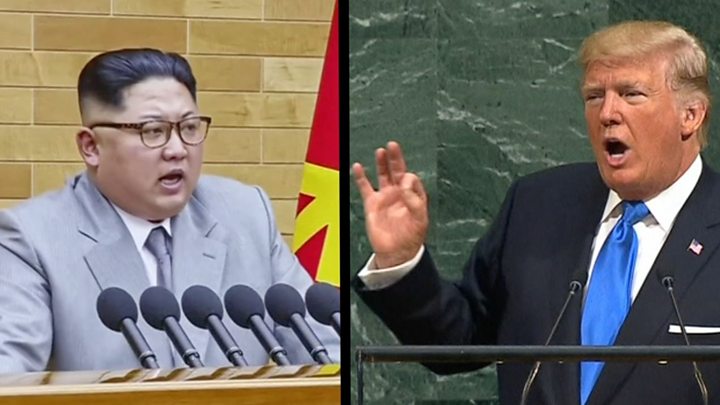
Media captionTrump and Kim's on/off bromance
After some fiery North Korean rhetoric, Mr Trump announced the summit would not be held.
But the North's Vice-Foreign Minister, Kim Kye-gwan, then struck a more conciliatory tone, calling Mr Trump's decision "unexpected" and "extremely regrettable". He said Pyongyang was willing "to sit face to face at any time".
Earlier on Friday, speaking to reporters outside the White House in Washington, the US president indicated that the summit could still be salvaged, saying: "We're gonna see what happens. We're talking to them [North Korea] now. It was a very nice statement they put out."
Mr Trump added: "Everybody plays games."

Related Topics

Harvey Weinstein released on $1m bail over rape and abuse charges


http://www.bbc.com/news/world-us-canada-44262665


Harvey Weinstein released on $1m bail over rape and abuse charges

Media captionAs Harvey Weinstein turns himself in, an accuser, Rose McGowan, reacts
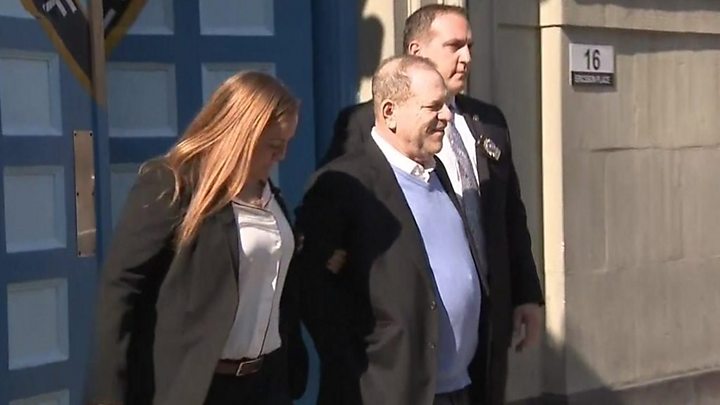
Former Hollywood film mogul Harvey Weinstein has been released on $1m (£751,000) bail after being charged in New York with rape and sexual abuse.
Mr Weinstein, 66, also agreed to wear a GPS tracker and to surrender his passport after turning himself in to police on Friday.
He denies non-consensual sex and his lawyer said he would plead not guilty.
The actress Rose McGowan, who accused Mr Weinstein of rape, told the BBC it was an "amazing day for his survivors".
"It's a very significant moment, it's a concrete slap in the face of abuse of power," she said. "It's just the beginning of that process and if we can see this through to the end, I hope we emerge victorious."
The allegations against the disgraced film producer triggered the #MeToo movement, which sought to demonstrate and draw attention to the widespread prevalence of sexual abuse and harassment.
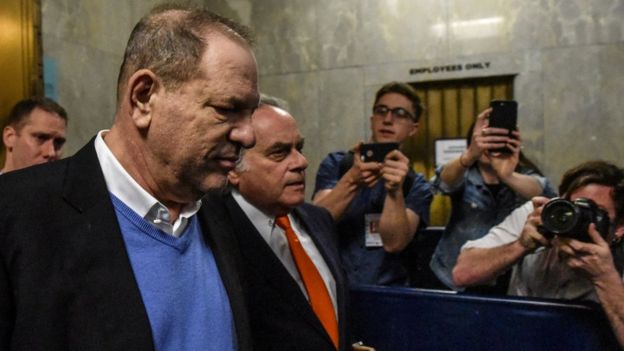
Harvey Weinstein exits the court room with his lawyer Benjamin Brafman after his arraignment at Manhattan Criminal Court on May 25, 2018Image copyrightGETTY IMAGES
Image captionHarvey Weinstein did not speak during his brief appearance at Manhattan Criminal Court
More than 70 women have accused Mr Weinstein of sexual misconduct although the charges relate to only two of them. Some allegations date back decades.

Led to court in handcuffs

Prosecutors said on Friday that Mr Weinstein had been charged with two counts of rape and one count of a criminal sexual act involving two women, who were not identified.
He had arrived at a police station in lower Manhattan during the morning, carrying three books. After having his mugshot and fingerprints taken, he was led out in handcuffs and taken to court.
In the brief court appearance, prosecutor Joan Illuzzi said the former studio boss had "used his position, money and power to lure young women into situations where he was able to violate them sexually".
Witnesses say Mr Weinstein appeared pale and stared into space while prosecutors outlined the bail agreement.
The case was then adjourned until 30 July.
Outside the court, Mr Weinstein's lawyer, Ben Brafman, told reporters his client would enter a not guilty plea.
"We intend to move very quickly to dismiss these charges," Mr Brafman said. "We believe that they are constitutionally flawed. We believe that they are not factually supported by the evidence."
The New York Police Department issued a statement thanking "these brave survivors for their courage to come forward and seek justice".
The identity of one of the women whose accusations prompted the charges was confirmed by her lawyer on Friday. Former actress Lucia Evans had already publicly accused Mr Weinstein of forcing her into oral sex in 2004.
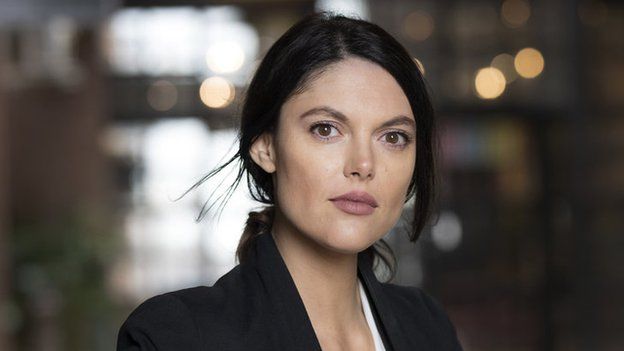
Lucia Evans is thought to be one of the accusers who prompted the chargesImage copyrightAGATON STROM
Image captionLucia Evans is thought to be one of the accusers who prompted Friday's charges
"This is an emotional moment," her lawyer, Carrie Golberg, said in a statement. "Today is big. But sexual violence is still happening. A victim or offender's fame should not matter. These cases must be prosecuted."
These are the first criminal charges against Mr Weinstein, who already faces a raft of civil lawsuits.
Mr Weinstein was fired last year from his production firm, the Weinstein Company, which later filed for bankruptcy. He has been condemned by top industry figures, and the organisation behind the Oscars expelled him from its membership.


Irish abortion referendum: Exit polls suggest landslide for repeal


http://www.bbc.com/news/world-europe-44241521


Irish abortion referendum: Exit polls suggest landslide for repeal


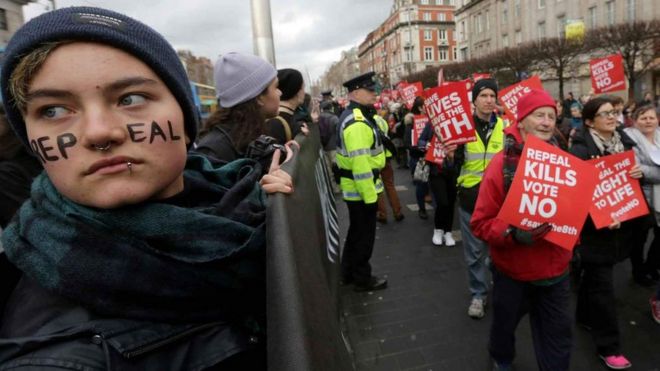
CampaignersImage copyrightGETTY IMAGES
Image caption


The vote was on whether to repeal a part of the constitution known as the Eighth Amendment

Exit polls published after Ireland's referendum on abortion suggest a large vote in favour of liberalising the law.
Polls by The Irish Times and RTE suggest about 69% voted to repeal a part of the constitution that effectively bans terminations.
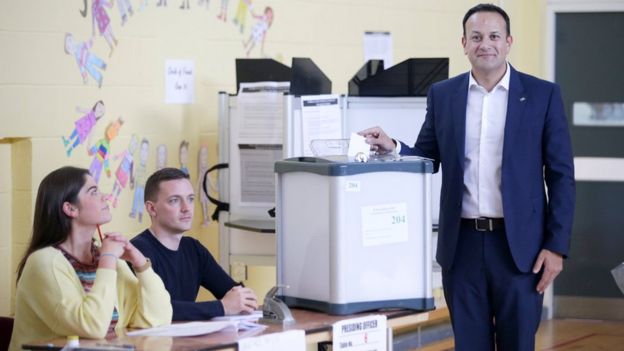
Taoiseach (prime minister) Leo Varadkar, who supported the reforms, said it looked as if the country was about to "make history".
Official counting of votes will begin at 09:00 local time.
Those taking part in Friday's referendum were asked whether they wanted to repeal or retain a part of the constitution known as the Eighth Amendment, which says an unborn child has the same right to life as a pregnant woman.
Broadcaster RTE's exit poll suggested 69.4% in favour of the Yes side and 30.6% for No. In Dublin, 79% of people voted for repeal, according to the RTE poll. 
An exit poll released by The Irish Times points to 68% Yes to 32% for No.
In other reaction:
  • Irish health minister Simon Harris tweeted: "Will sleep tonight in the hope of waking up to a country that is more compassionate, more caring and more respectful"
  • Prominent No campaigner Cora Sherlock expressed disappointment at the exit polls but said the pro-life movement would "rise to any challenge it faces". She added: "Let's go into tomorrow with this in mind"
  • Penny Mordaunt, the UK's minister for women and equalities, called it a "historic and great day for Ireland and a hopeful one for Northern Ireland". Northern Ireland's abortion laws are much stricter than the rest of the UK
  • The leader of Northern Ireland's centrist Alliance Party, Naomi Long, said it appeared to be an "incredible result" for the Yes campaign

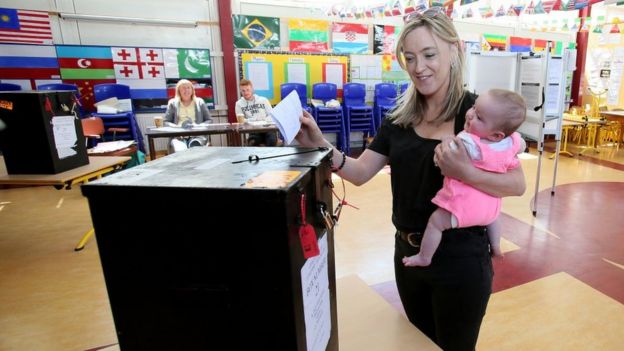
Woman carrying baby to voteImage copyrightGETTY IMAGES
Image captionThe Eighth Amendment was introduced after a referendum in 1983

Currently, abortion is only allowed when a woman's life is at risk, but not in cases of rape, incest or fatal foetal abnormality.
The turnout looks to have been higher than that for the country's referendum on same-sex marriage and its most recent general election.


Media captionThe background and potential outcomes to the Republic of Ireland's abortion referendum

More than 3.2 million people were registered to vote in the referendum, with more than 100,000 new voters registering ahead of the poll.
The referendum was the result of a decades-long debate about abortion in the Republic of Ireland and was the country's sixth vote on the issue.

Where does the law stand?

The now-controversial Eighth Amendment was introduced after a referendum in 1983.
It "acknowledges the right to life of the unborn and, with due regard to the equal right to life of the mother, guarantees in its laws to respect, and, as far as practicable, by its laws to defend and vindicate that right" - meaning the life of the woman and the unborn are seen as equal.
Since 2013, terminations have only been allowed in Ireland when the life of the mother is at risk, including from suicide.
The maximum penalty for accessing an illegal abortion is 14 years in prison.
In 2017, the Citizens' Assembly, a body set up advise the Irish government on constitutional change, voted to replace or amend the part of Ireland's Constitution which strictly limits the availability of abortion.
So the Irish people were asked if they wanted to remove the Eighth Amendment and allow politicians to set the country's abortion laws in the future.
The wording on the ballot paper was: "Provision may be made by law for the regulation of termination of pregnancies."

Taoiseach Leo Varadkar casts his voteImage copyrightREUTERS
Image captionTaoiseach (Irish prime minister) Leo Varadkar casts his vote on Friday

The ballot paper did not mention the Eighth Amendment or abortion, instead asking: "Do you approve of the proposal to amend the Constitution contained in the undermentioned Bill?"
Those who wanted to retain the Eighth Amendment voted No, while those who wanted to replace it voted Yes.
If a majority has voted yes - as appears to be the case - then the Irish government's recommendation is that women will be able to access a termination within the first 12 weeks of their pregnancy.
However, beyond 12 weeks, abortions would only be permitted where there is a risk to a woman's life or of serious harm to the physical or mental health of a woman, up until the 24th week of pregnancy.
Terminations would also be permitted in cases of fatal foetal abnormality.