2018年1月15日 星期一

Will Cape Town be the first city to run out of water?


http://www.bbc.com/news/business-42626790


Will Cape Town be the first city to run out of water?
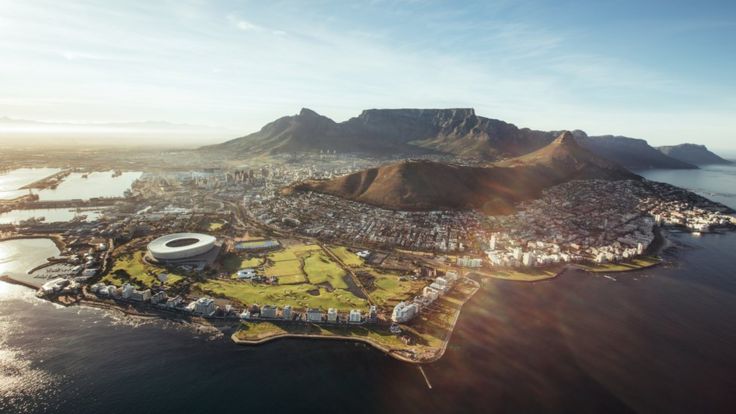
Aerial view of Cape Town South AfricaImage copyrightGETTY IMAGES
Image captionThere's water all around Cape Town, South Africa, but little of it is drinkable
Cape Town, home to Table Mountain, African penguins, sunshine and sea, is a world-renowned tourist destination. But it could also become famous for being the first major city in the world to run out of water.
Most recent projections suggest that its water could run out as early as March. The crisis has been caused by three years of very low rainfall, coupled with increasing consumption by a growing population. 
The local government is racing to address the situation, with desalination plants to make sea water drinkable, groundwater collection projects, and water recycling programmes.
Meanwhile Cape Town's four million residents are being urged to conserve water and use no more than 87 litres (19 gallons) a day. Car washing and filling up swimming pools has been banned. And the visiting Indian cricket team were told to limit their post-match showers to two minutes. 
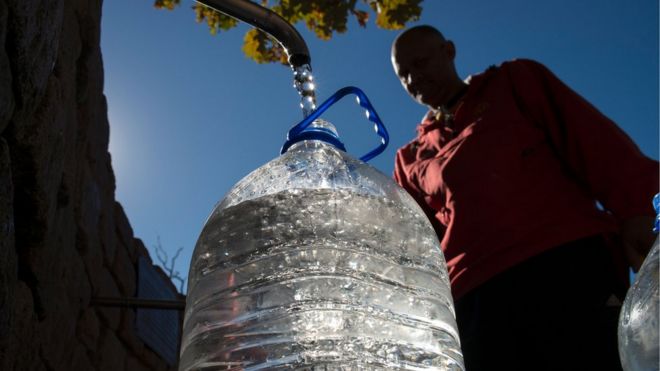
Man filling flagon from tapImage copyrightGETTY IMAGES
Image captionSouth Africa's Western Cape region is suffering its worst water shortage in more than a hundred years
Such water-related problems are not confined to Cape Town, of course.
Nearly 850 million people globally lack access to safe drinking water, says the World Health Organization, and droughts are increasing.
So it seems incredible that we still waste so much of this essential natural resource. In developing and emerging countries, up to 80% of water is lost through leakages, according to German environmental consultancy GIZ. Even in some areas of the US, up to 50% of water trickles away due to ageing infrastructure.
A growing number of technology companies are focusing their work on water management - applying "smart" solutions to water challenges.

More Technology of Business

Technology logoImage copyrightGETTY IMAGES
For example, French company CityTaps is on a mission to streamline water access in urban homes with its smart water meters linked to an internet-based management system.
The company is first targeting poor homes in urban areas and its system, CTSuite, is currently being trialled in Niger.
Users buy "water credits" via their mobile phones and a smart meter dispenses only as much water as has been paid for. Users receive alerts when their credit balance gets low, and if they don't top up the account, the meter automatically switches off the flow.
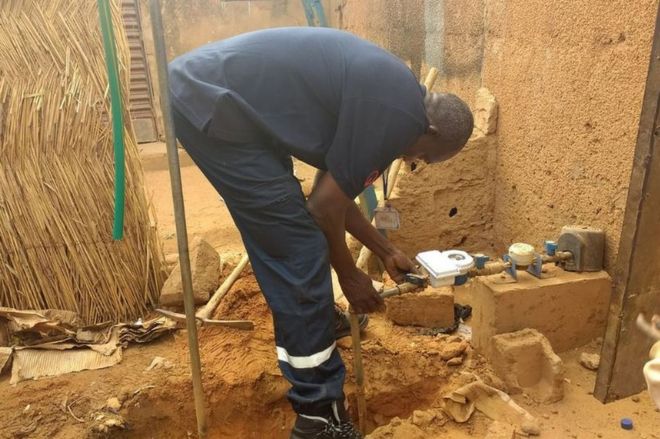
Engineer installing water meterImage copyrightCITYTAPS
Image captionThe CityTaps smart water meter is fairly easy to install
The utility can track water usage remotely in near real-time via the internet. A sudden spike in water outflow and a change in pressure, measured by "internet of things" sensors, can then help identify leaks across the network.
Water companies are also using drones and satellites to help spot leaks, and in some circumstances even divining rods - despite scientific doubts, some firms say they do work.
"The internet of things offers new avenues for technological innovation in the water field, mostly by providing real-time data that - we hope - can be used to help utilities become ever more efficient and high-performing," says Gregoire Landel, chief executive of CityTaps.
Better water management also helps save on the electricity and chemicals required to produce drinkable water.

Woman and child filling bucket with waterImage copyrightCITYTAPS
Image captionFamilies in Niger now have access to metered water they pay for via mobile phone
Meanwhile, other companies are using technology to harvest water from new sources.
US-based WaterSeer, for example, is developing a device capable of collecting water from the air.
An internal fan draws air into an underground collection chamber where the vapour condenses, making use of the earth's cooler temperatures. Solar or electricity grid-powered coolers also help the condensation process.
The company says water can be produced with "less than a 100 watts" of electricity - the power requirement of an old-fashioned light bulb.

Man gardening next to WaterSeer water condenserImage copyrightWATERSEER
Image captionWaterSeer's water condenser prototype is currently being tested and developed
"Individuals and businesses will pave the way for innovative solutions, as they will be able to move and adopt a series of them quicker than large utilities that are sometimes mired in regulatory constraints and rigid decision-making cultures," says Nancy Curtis, a founding partner of WaterSeer.
"However, utilities offer the opportunity to make large-scale impacts on replenishing depleting water supplies."
A number of water-restricted municipalities in the US are exploring how WaterSeer devices could be used to improve water security, the company says. But the device is still being tested in the field, so these are early days.
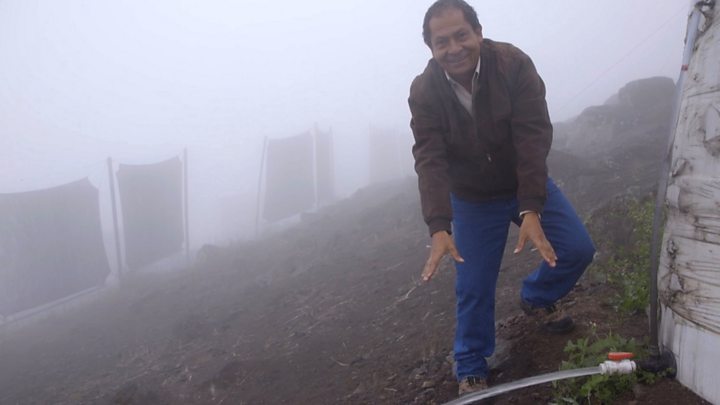
Media captionHow fog nets are catching water for the slums in Lima
"A community of 500 would save 40 million US gallons (150m litres; 33m gallons) of water or more each year, reducing stress on traditional surface and underground sources," argues Ms Curtis. 
Technology may have its place in helping us use water more efficiently, but it is unlikely to have much impact on those without any access to water in the first place, says Alexandros Makarigakis of Unesco's international hydrological programme (IHP).
"Smart water systems cannot be expected to have much impact regarding provision of access for the unconnected. [They] are more effective in the urban context," he says.
This is echoed by Vincent Casey, senior manager at the charity WaterAid. 

Maasai women carrying water in KenyaImage copyrightGETTY IMAGES
Image captionIn many rural areas around the world people have to walk miles to fetch water
"The technology to connect people to a water supply has been around since ancient Egypt. It's not a technical problem," he says. 
More important is how water supplies are organised, he argues, which is an issue primarily for governments, with support from the private sector.
"The priority is mobilising resources and paying sufficient attention to the management arrangement to keep people connected," says Mr Casey. 
That's not to say WaterAid eschews tech completely. It has successfully used mobile app mWater to monitor water access and existing networks.
For those with no direct-to-home supply, services like Grundfos' "water ATM", which enables people to access water from a local dispenser using a pre-paid card, are also proving useful.
But there is a sense that much of this technology is merely tinkering at the edges. The overarching issue is the potentially devastating effect of global warming on water availability and how we, collectively, endeavour to tackle it.
  • Follow Technology of Business editor Matthew Wall on Twitter and Facebook

Carillion: Small firms count the cost of collapse


http://www.bbc.com/news/business-42695661


Carillion: Small firms count the cost of collapse

Media captionThe Carillion collapse: What does it mean?
Thousands of small firms working for failed construction giant Carillion are waiting to learn if they will be paid, amid growing fears some could close.
Carillion used an extensive network of sub-contractors and local suppliers, paying them almost £1bn a year, according to its latest annual report. 
Employers' groups are trying to assess the exposure of small firms, but said many faced financial hardship.
It comes as critics step up calls for a review into the Carillion crisis.
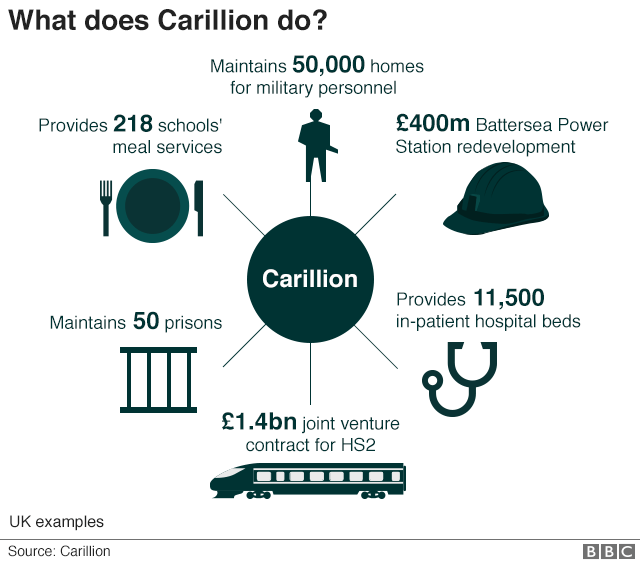
Carillion's work stretched from the HS2 rail project and military contracts to maintaining hospitals, schools, and prisons. 
Although Cabinet Office Minister David Lidington said on Monday there would be government support for public sector contracts, those firms working on purely private sector deals would get only two days' support.
Carillion spent £952m with local suppliers in 2016 and used an extensive network of small firms because, it said, "we remain wholly committed to generating regional economic growth and development". 
But the head of the Federation of Small Businesses said thousands of jobs and livelihoods were now at risk because those firms would be at the back of the queue for payment.
Mike Cherry said it was a situation made worse because Carillion extended its payment schedule to suppliers last year.
"These unpaid bills may well go back several months," he continued. "I wrote to Carillion back in July last year to express concern after hearing from FSB members that the company was making small suppliers wait 120 days to be paid."
A partner at one accountancy firm, who asked not to be named, said small firms were looking at total losses stretching into hundreds of millions of pounds. 
"Asset sales won't even raise enough to cover the debts of senior bank creditors, so many small firms won't see a bean," he said. 
Infographic showing what Carillion does
Rudi Klein, head of Specialist Engineering Contractor, an umbrella group representing suppliers to the construction industry, said Carillion outsourced virtually all its work.
He said the government knew of Carillion's reliance on sub-contractors, but continued to award the company lucrative work despite growing concerns about its finances.
"It's that supply chain who is going to bear the massive loss," he said. "There could be a large number of firms that will experience substantial financial distress."
The boss of a Carillion sub-contractor, describing himself as Mike, in southern England, contacted the BBC with his own story.
"We've invoiced them for £240,000, going back to September last year. I don't think we'll get this money back.
"For us, it's a bad day, it'll impact us for the year. There are smaller contractors who will be impacted worse."
He added: "We've always been struggling with the Carillion culture... Their procurement people weren't good and we didn't like working for them."
Presentational grey line

Analysis: Dominic O'Connell, Today business presenter

Lightning seems to strike the same place remarkably often in Britain's construction and support services sectors. 
For some, Carillion's demise will seem like a bolt from the blue. But look back 20 years and you find a surprising number of companies which struck similar problems, although not always with fatal consequences. 
Amey, Jarvis, Connaught, Rok, G4S, Balfour Beatty, Serco, Mitie - and many others - have had to own up to accounts that were, to use a euphemism, optimistic. Most lived to fight another day. Carillion did not.
Talk to executives in the industry and they easily find the common thread. Companies that are built up quickly through acquisitions, as Carillion was from the combination of Tarmac, Wimpey, Mowlem and Alfred McAlpine - have an extra struggle first to understand then to integrate their disparate activities. 
Industry experts spoken to by the BBC also think that Carillion overpaid for its acquisitions, leaving it with less financial fat to fall back on when the going got tough.
All the companies above were hurt by what turned out to be aggressive accounting. 
Presentational grey line
On Monday, Mr Lidington said the government was stepping in to pay employees and small businesses working on Carillion's public contracts and assess the distribution of work among other companies. 
However, companies working on private projects will get no such support.
Accountancy firm PwC, which is overseeing Carillion's liquidation, said in a statement: "Unless told otherwise, all employees, agents and subcontractors are being asked to continue to work as normal and they will be paid for the work they do during the liquidations."
But there were anecdotal reports that work had stopped on many projects. 
A bricklayer on the new £350m Midland Metropolitan Hospital building, Philip Ellis, told the BBC that when workers turned up on Monday they were told to go home. 
He said: "About 20 of us working for our sub-contractor were told we could go on-site to collect equipment, but that was it.... I spent the day phoning recruitment agencies looking for work - but was told everyone's doing that."

'Watershed'

Ministers held an emergency meeting on Monday evening to discuss the impact of Carillion's demise on public services.
Mr Lidington said after the meeting that "people were turning up to work [and] we have not had any reports of serious interruption to service delivery".
But it comes amid growing calls for a review of the way government hands out public contracts. 
Labour leader Jeremy Corbyn accused ministers of "shocking negligence", and said Carillion's crisis was a "watershed moment" for the "outsource first dogma" that had "fleeced the public".
Mr Lidington's Cabinet Office office Oliver Dowden said the government had put in place "contingency measures" when concerns were raised about Carillion.
"The principle contingency measure we took was to ensure that all new contracts were joint venture contracts," he told the BBC. "That means the risk is shared with other companies and on those contracts, they continue to be delivered."
There is also mounting criticism of the pay packages enjoyed by directors in the run-up to Carillion's crisis. 
Former chief executive Richard Howson, in charged until last year when Carillion issued the first of three shock profit warnings, will continue to be paid until October.
Mr Lidington told the Commons on Monday that the official receiver had the power to impose penalties if it uncovered any misconduct.